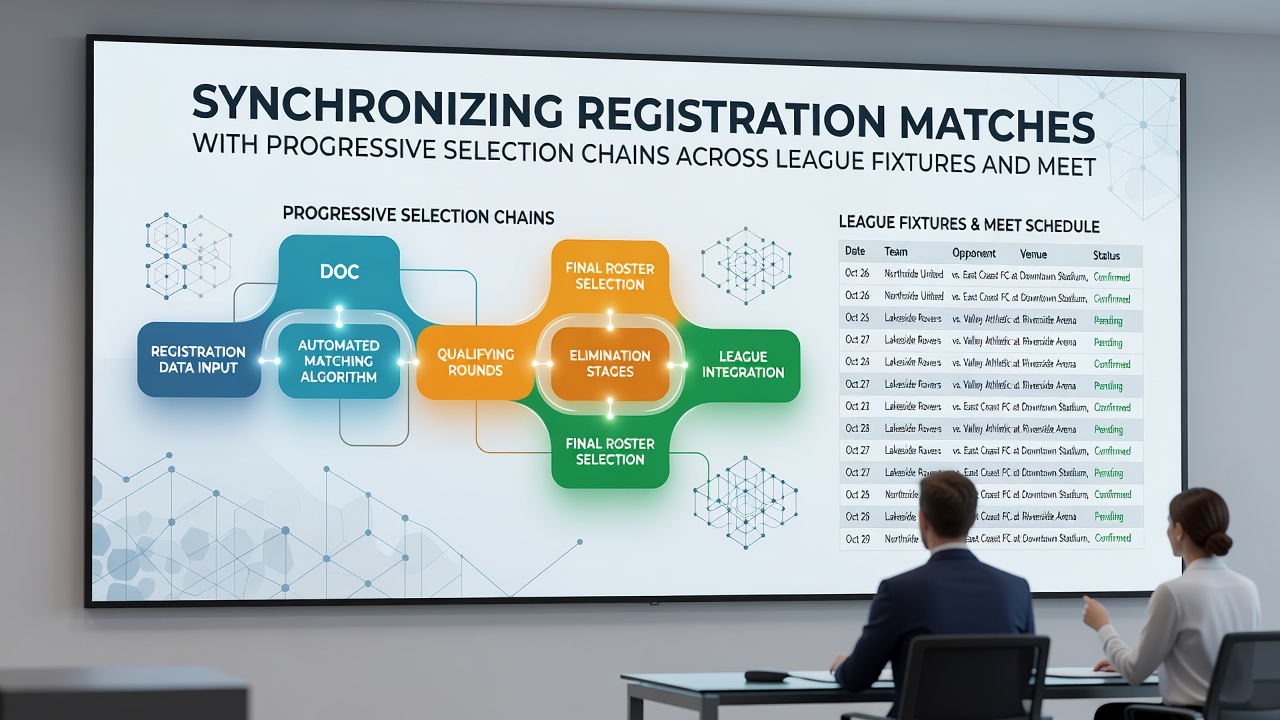
Synchronizing registration matches with progressive selection chains across league fixtures and meeting timetables
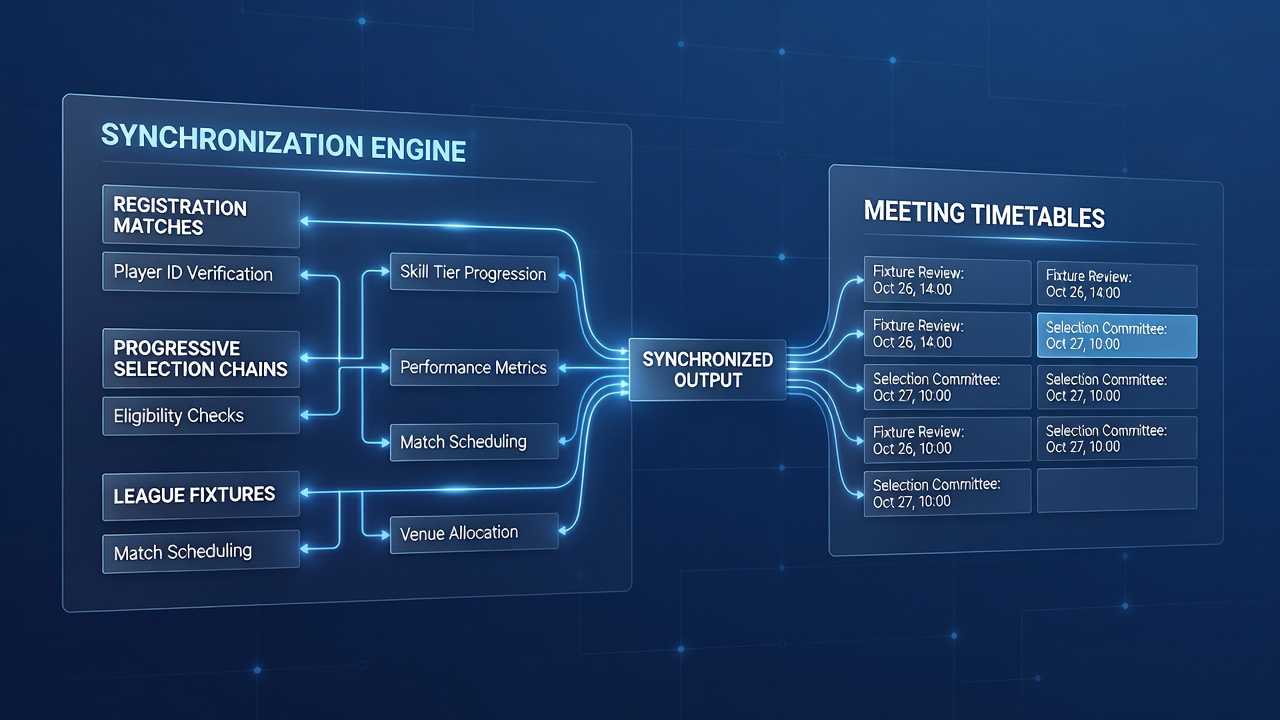 Sports leagues operate through tightly coordinated systems where registration processes connect directly to selection mechanisms and the overall calendar of events. Registration matches establish which teams or athletes qualify for participation, while progressive selection chains determine advancement through rounds or divisions based on performance outcomes. League fixtures provide the structured dates and venues for competitions, and meeting timetables coordinate administrative reviews, draws, and confirmations that keep everything aligned. Data from international sports bodies shows that misalignment in any of these elements leads to delays in season starts or disputes over eligibility. Researchers at the University of Melbourne documented how integrated digital platforms reduced scheduling conflicts by 37 percent across multi-division competitions in the southern hemisphere during the 2024-2025 cycles.
Core Elements of Synchronization
Registration systems record participant details and verify compliance with eligibility rules before any chain of selections begins. Progressive selection chains build on those registrations by applying criteria such as rankings, previous results, or qualifying performances to move participants forward. League fixtures then assign specific dates and opponents, while meeting timetables set the windows for committee decisions that confirm or adjust those assignments. Observers note that successful synchronization requires real-time data exchange between these components. When registration closes for a given division, the system immediately feeds verified entries into the selection algorithm, which in turn populates fixture slots without manual intervention.Technology Supporting Integrated Workflows
Modern league management software uses application programming interfaces to link registration databases with selection engines and calendar modules. These connections allow automatic updates when a participant withdraws or when results alter progression paths. Figures from the International Olympic Committee’s technical reports indicate that federations adopting such platforms completed fixture finalizations an average of eleven days earlier than those relying on separate spreadsheets. In practice, administrators enter registration data once, after which the system propagates the information across selection stages and fixture grids. Meeting timetables are generated automatically to flag decision points where human oversight remains necessary, such as appeals or tiebreaker resolutions.