Charting Weather-Driven Fluctuations in Live Market Adjustments for Outdoor Events Across Platform Ecosystems
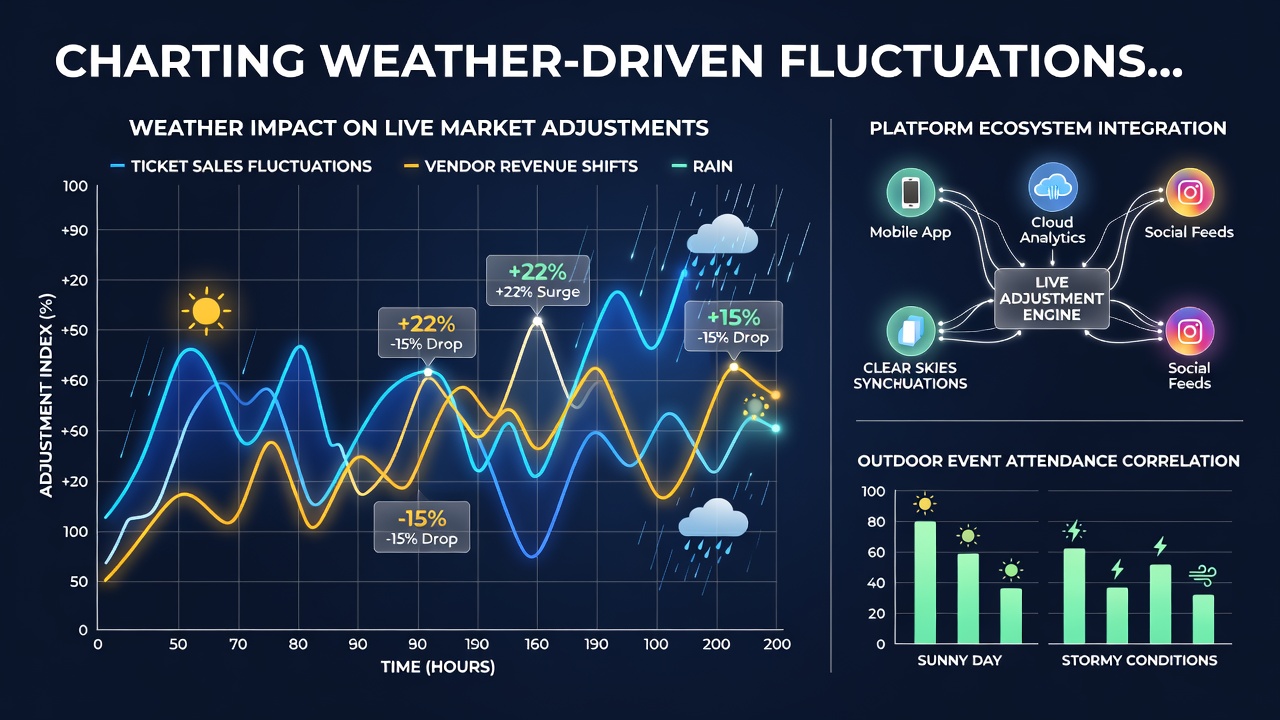
Weather patterns exert direct influence on pricing algorithms and availability metrics for outdoor events, with platforms responding through automated systems that recalibrate offers based on forecast data. Researchers tracking these dynamics note consistent correlations between precipitation levels, temperature swings, and shifts in ticket demand across major ecosystems including ticketing services and venue management software. In July 2026, for instance, extended heatwaves across parts of North America prompted several platforms to activate surge pricing protocols for festival passes and stadium seating within hours of updated meteorological alerts.
Platform Algorithms Respond to Forecast Inputs
Ticketing platforms integrate feeds from meteorological services to trigger live adjustments, where rising humidity or incoming storms lead to immediate revisions in dynamic pricing models. Data compiled by the National Oceanic and Atmospheric Administration shows that outdoor concert attendance drops an average of 18 percent when forecasts predict sustained rainfall above 0.5 inches, prompting systems to lower base prices or introduce bundled add-ons such as rain ponchos and covered seating upgrades. European Environment Agency records from similar periods reveal parallel patterns in continental markets, where platforms serving music and sports events synchronize their databases to reflect regional variations in storm intensity.
These adjustments occur through layered decision trees that weigh historical attendance figures against current conditions, allowing operators to maintain revenue streams while mitigating no-show risks. Observers at research institutions have documented cases where platforms serving multi-venue tours deploy region-specific modifiers, raising or reducing fees in tandem with local radar updates.
Geographic and Seasonal Variations Shape Market Responses
Market ecosystems demonstrate distinct behaviors across climates, with temperate zones experiencing sharper fluctuations during shoulder seasons compared to consistently arid regions. A University of Melbourne study examining Australian outdoor events found that platforms adjusted inventory releases by up to 25 percent when temperature forecasts exceeded 35 degrees Celsius, shifting emphasis toward evening sessions and shaded premium zones. In contrast, Scandinavian platforms tracked by Nordic meteorological networks tend to emphasize wind speed thresholds, which affect both attendee comfort and equipment safety margins for open-air stages.
July 2026 projections indicate heightened volatility in mid-latitude markets, where overlapping heat and thunderstorm risks coincide with peak festival calendars. Platforms serving these areas employ cross-referenced data layers that combine satellite imagery with ground station readings to forecast localized impacts hours ahead of event start times.
Integration Across Multiple Ecosystems
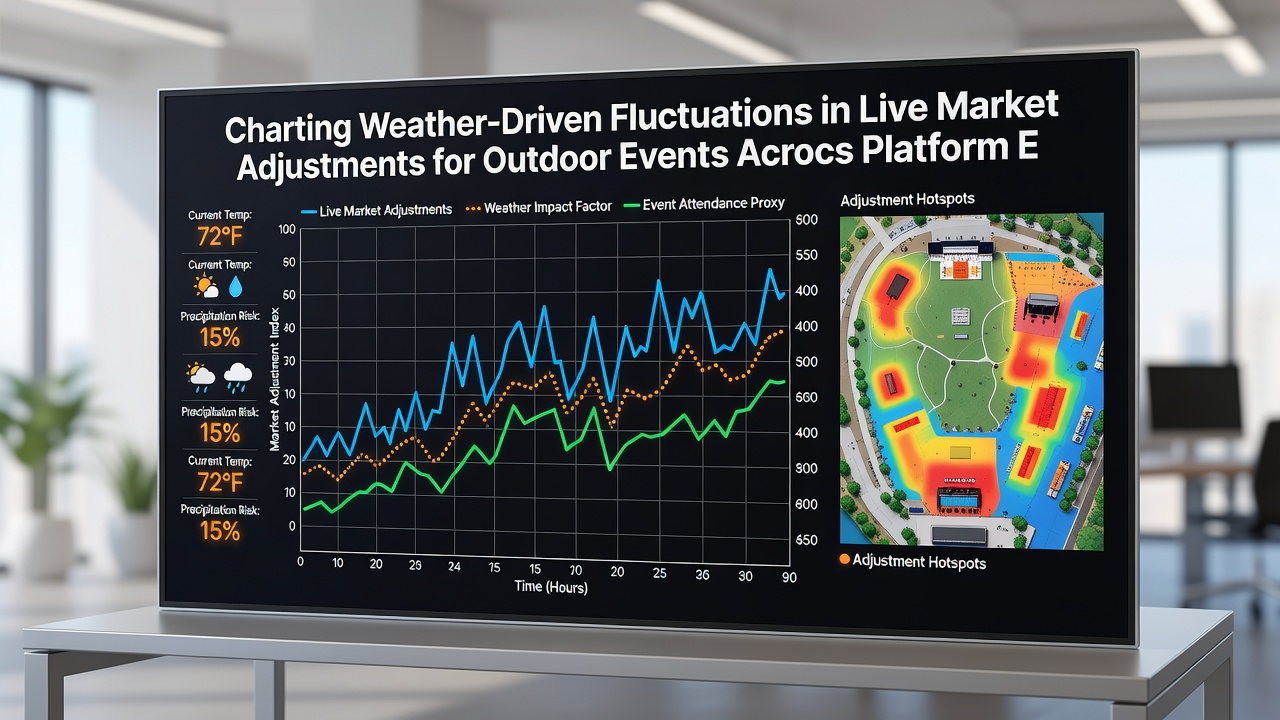
Platform interoperability allows weather signals to propagate through interconnected systems, affecting not only primary ticketing but also secondary resale markets and ancillary service providers. Industry reports from the International Ticketing Association highlight how APIs shared between primary vendors and hospitality platforms enable simultaneous recalibrations, such as offering indoor alternatives or transport vouchers when conditions deteriorate. These linkages create cascading effects where one platform's adjustment influences availability on others within minutes.
Those who monitor these networks report that larger ecosystems maintain redundant data pipelines to ensure continuity during high-impact weather events, preventing single-point failures that could leave markets unresponsive. Academic analyses from Canadian universities further illustrate how such integrations reduce revenue leakage by aligning supply with real-time demand signals derived from weather parameters.
Data Sources Driving Predictive Adjustments
Live market systems draw upon ensembles of forecast models rather than single sources, incorporating probabilistic outputs that assign confidence intervals to potential attendance changes. According to findings published by the World Meteorological Organization, platforms utilizing multi-model approaches achieve greater stability in their adjustment cycles, avoiding overreactions to outlier predictions. This methodology supports sustained operations across diverse outdoor settings including marathons, agricultural fairs, and open-air theater productions.
Stakeholders in the event sector continue to refine these frameworks by incorporating additional variables such as air quality indices and UV exposure levels, which increasingly factor into consumer decision-making during extended outdoor exposures. The resulting datasets enable more granular segmentation of user cohorts based on weather tolerance profiles.
Conclusion
Weather continues to serve as a primary driver of real-time market recalibrations for outdoor events, with platforms across ecosystems leveraging integrated data streams to synchronize responses. Continued advancements in forecasting precision and algorithmic responsiveness support more adaptive management of availability and pricing structures. As July 2026 approaches with its anticipated seasonal pressures, these systems stand positioned to process evolving conditions through established cross-platform protocols.